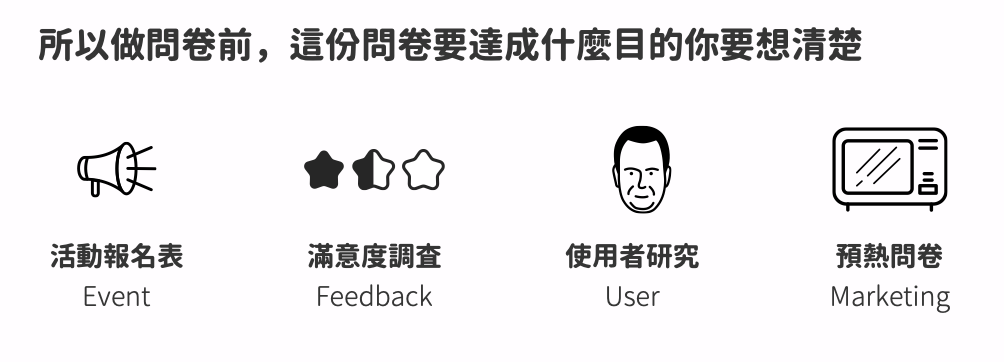
The structure of the questionnaire comes with the purpose of the survey, so before building the structure, think about the purpose of the questionnaire or the type of data you want to collect. Once you have established the objectives and motives, you can begin to build the prototype of the entire questionnaire.
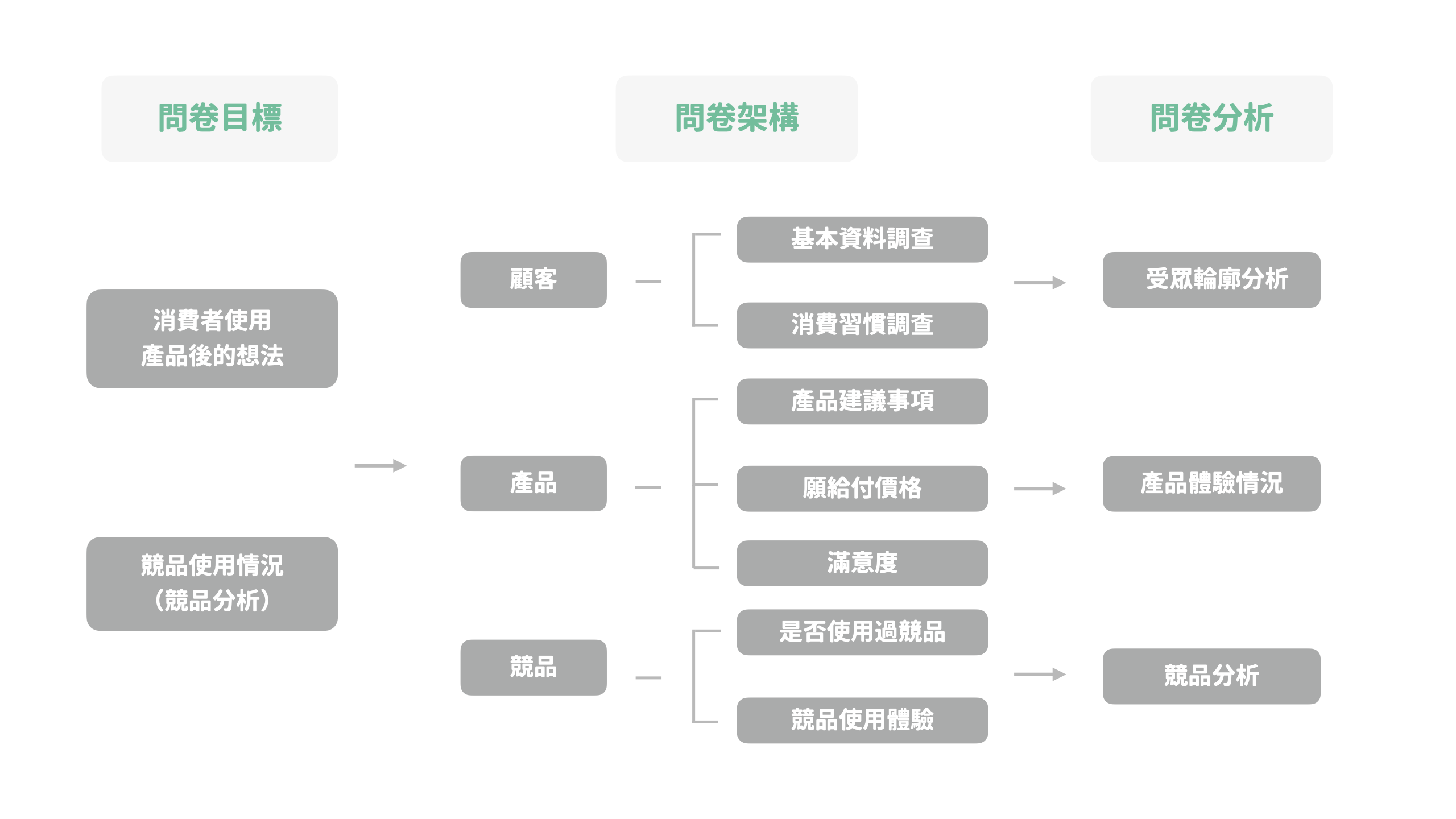
For example, the marketing department is designing a 'consumer experience' questionnaire to find out 'what consumers think of the product after using it' and 'whether consumers have used competitive products'. The questionnaire can be designed to cover three reference values: basic customer information, product experience, and usage of competitive products. In this way, the collected responses can be used as a reference for product optimization in the next season.
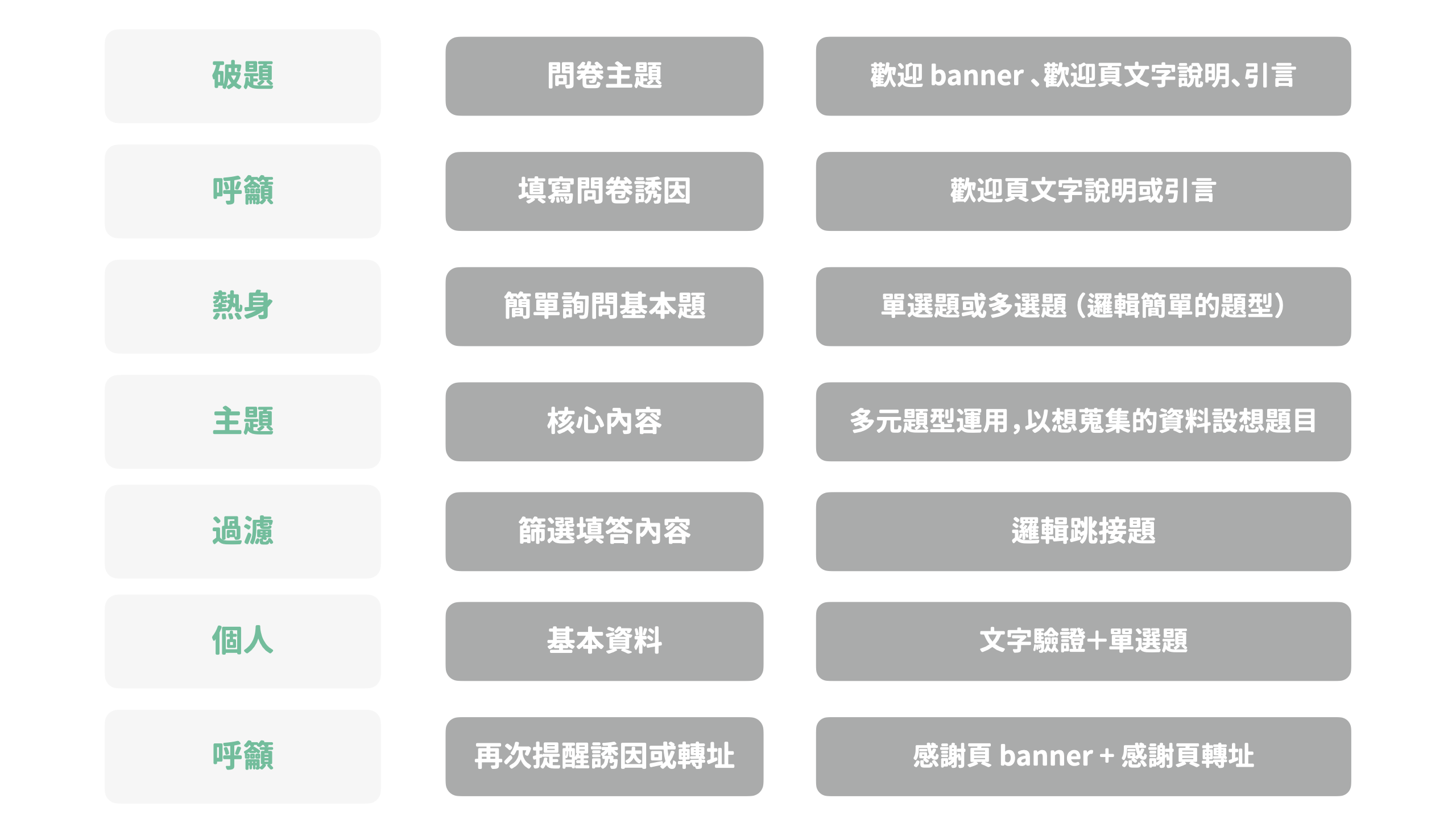
After shaping the preliminary idea of the questionnaire, you can then use the following logic to build the structure of the questionnaire.
Address the point: clearly state the purpose of the questionnaire
Appeal: provide incentives to fill out the questionnaire
Warm up: simple questions
Topic: the core contents of the questionnaire
Filter: filter the responses
Personal: background and information about the respondent
Appeal: point out the incentives to fill out the questionnaire again
The following is an example of a 'Consumer Experience Questionnaire' and an 'Event Registration Form' to give you a better understanding of how to apply the above logic to a questionnaire.
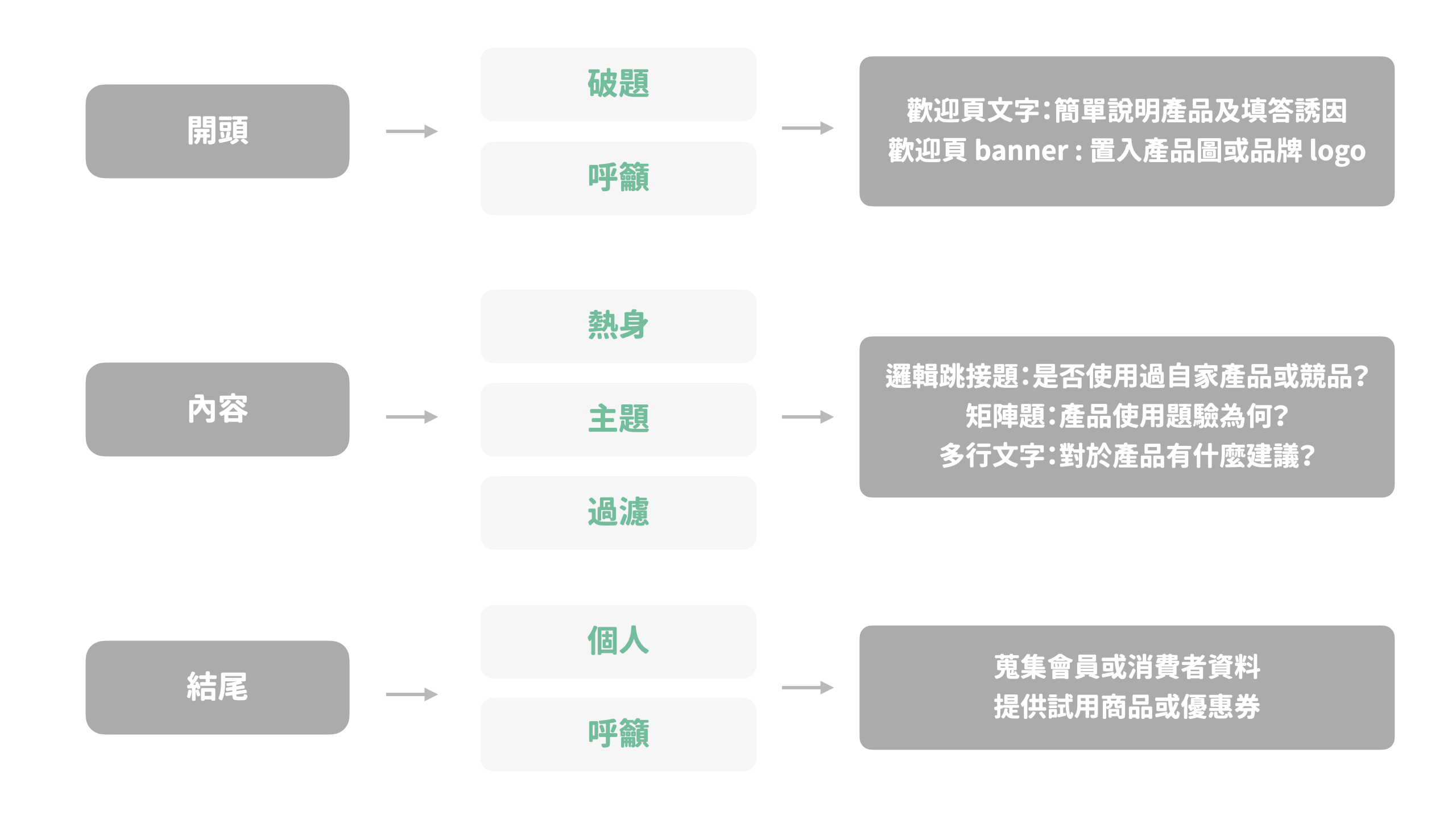
Consumer Experience Questionnaire
Put simply, designing a questionnaire is like telling a story, which entails the opening, the core, and the closing.
Opening: Use the 'welcome page texts' and 'welcome page banner' to let people understand the questionnaire topic at a glance.
Core: Design the contents of the questionnaire according to the data you want to collect, from simple questions to difficult questions, so that respondents can readily understand the questions.
Closing: Use the 'thank-you page' to lead respondents to the company's official website, or provide coupons for customers for their next purchase, thereby boosting marketing effectively.
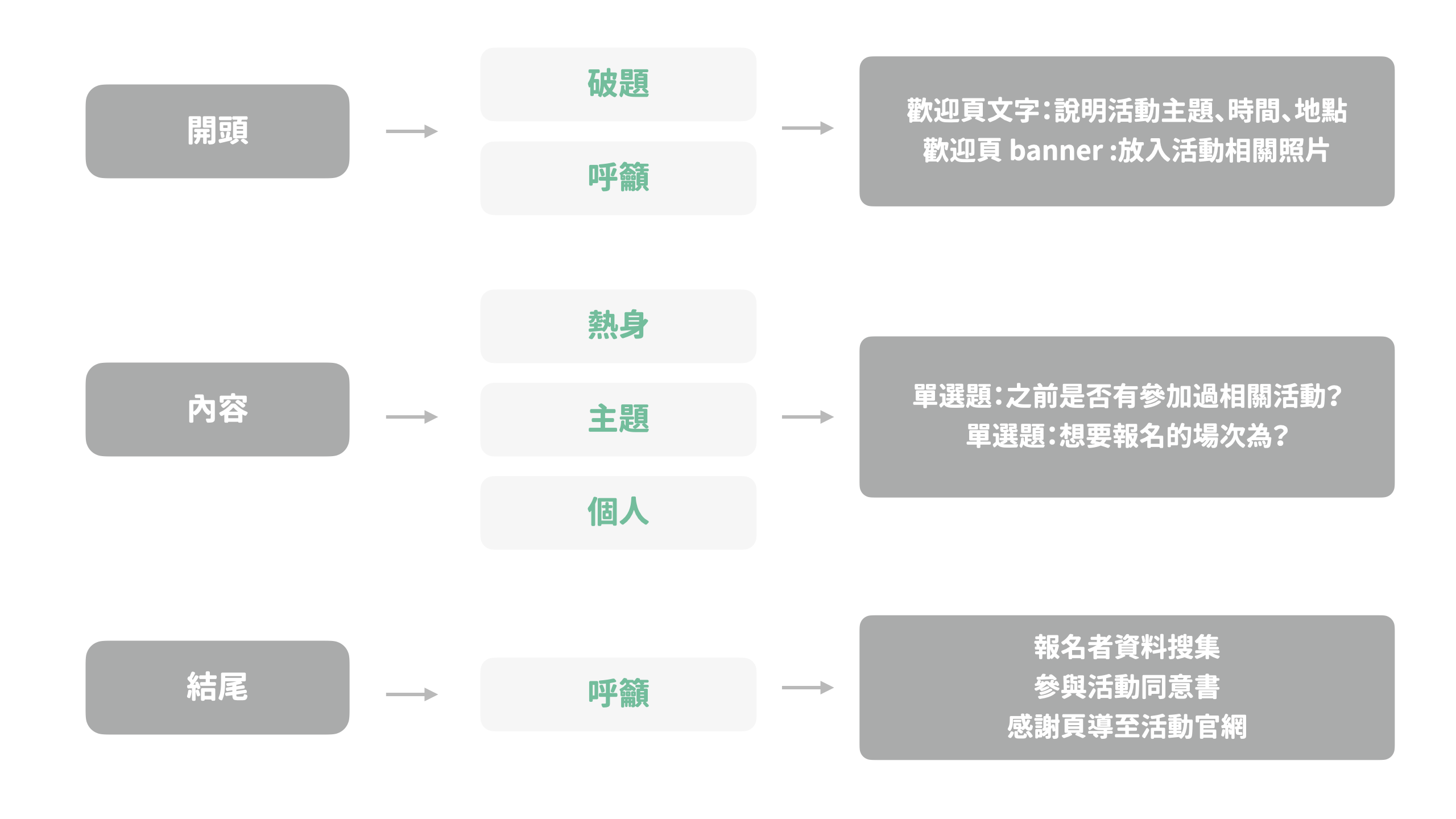
Event Registration Form
Unlike the consumer experience questionnaire, the event application form focuses on the collection of information from applicants, a clean and simple layout, and a smooth form-completing experience.
Opening: Point out the time and location of the event through 'welcome page texts' and 'welcome page banner'.
Core: Inquire about the venue and group that respondents would like to attend, and ask them to leave their personal information for follow-ups.
Closing: Use the 'thank-you page' to navigate to the event website, communities, etc.
Although the above suggests building a questionnaire structure in a logical order, everyone has a different context of use, so not every questionnaire needs to be so rigorously structured.
The main thing is to design a questionnaire according to the data you want to collect and what it should contain. As long as the feedback aligns with your purposes and needs, it is a good questionnaire!
Summary
Create a systematic questionnaire structure based on your purposes to make the feedback more accurate!