When you are creating a questionnaire, 'designing the questions' is a crucial component. This article compiles tips on how to decide the content, order and type of questions for you to get more comfortable with designing a questionnaire.
How to decide the contents of the questions?
Before designing questions for a questionnaire, you can draw up a questionnaire structure according to what the questionnaire intends to collect, refer to relevant papers or research reports, and list the required information and the orientation of the questionnaire, such as brand awareness, member usage rate, reasons for purchasing products, etc., from which you then build the framework of the questions.
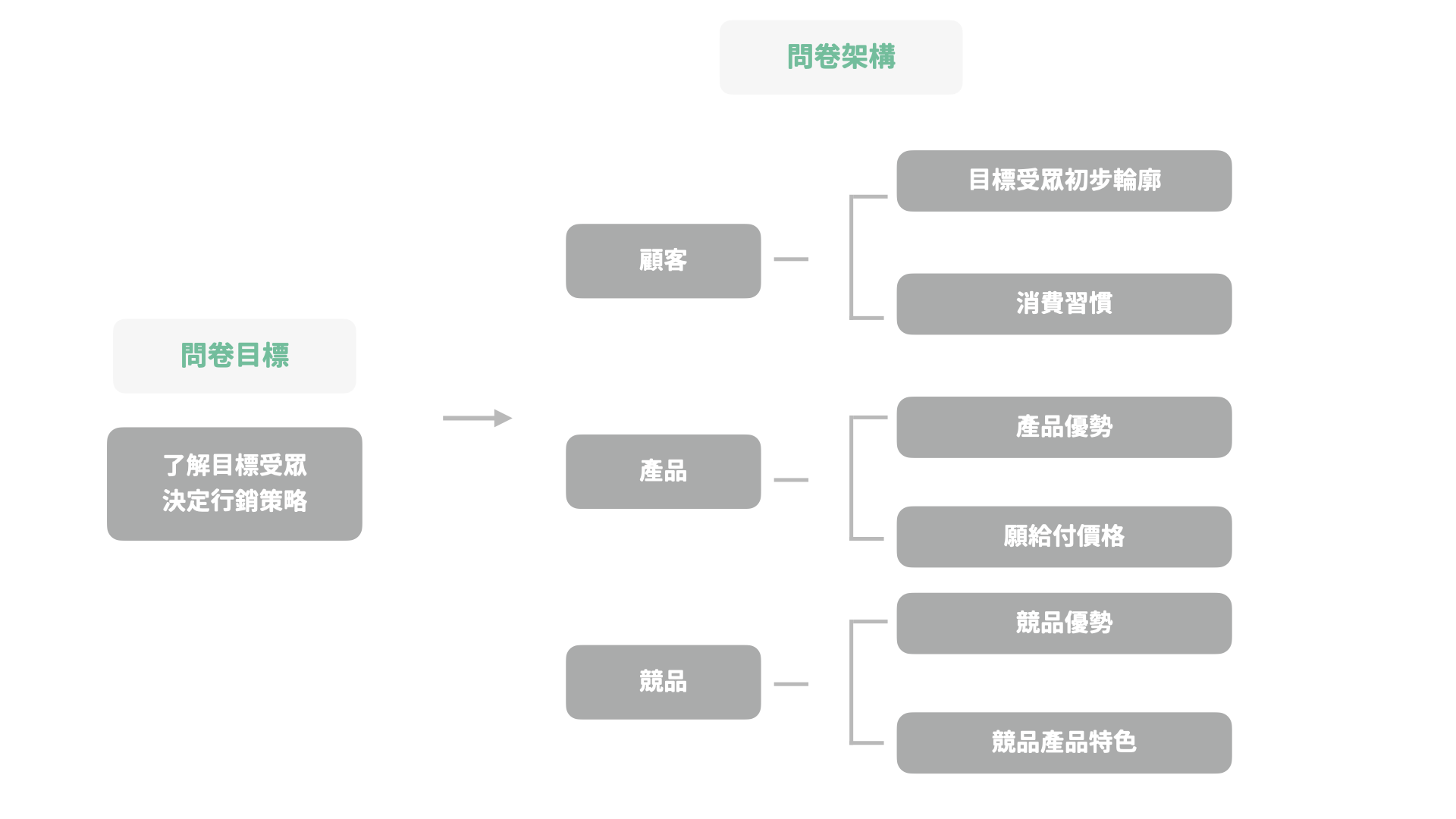
For example, the goal of the marketing department in designing the questionnaire is to 'understand the profile of the target customer base and determine the marketing strategy'. The structure of this questionnaire can be simply divided into three aspects: 'customers', 'products', and 'competitive products'.
By approaching the items you want to explore in these three aspects and using such information to list questions, you can collect useful information to determine the marketing model and channel strategy.
In addition, SurveyCake provides questionnaire templates. You can choose one to use based on the needs of your own questionnaire and modify the contents or the order of questions according to the direction of the questionnaire, thereby saving a lot of time on questionnaire design.

How to design a question?
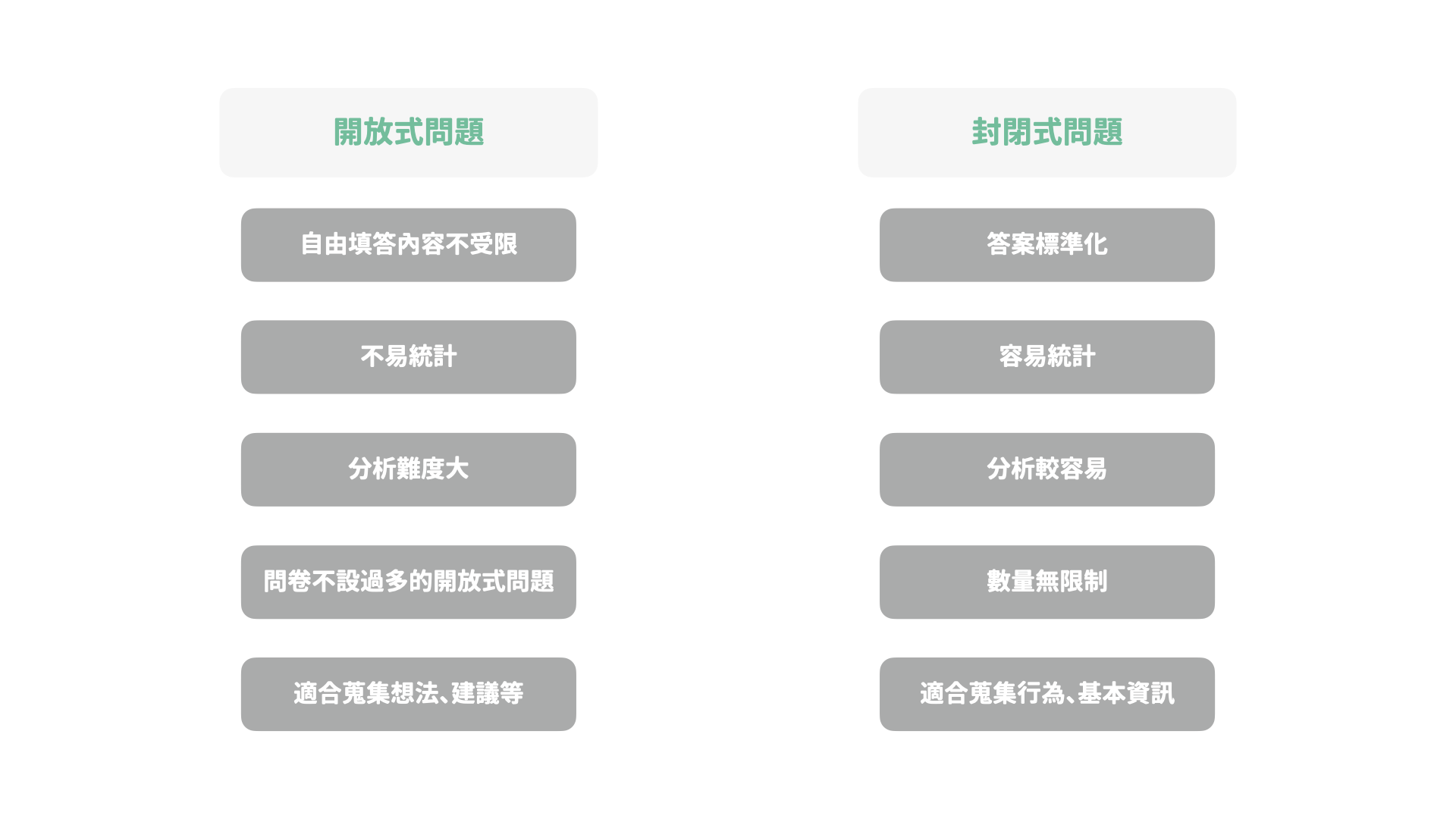
Questions in a questionnaire can be simply divided into two types: 'open-ended' and 'closed-ended'. 'Open-ended questions' allow respondents to answer freely. Since there is no restriction on answers, sometimes 'unexpected answers' appear. However, open-ended questions should only account for a small portion of a questionnaire. If there are too many such questions, it is 'not easy to add up' and 'more difficult to analyze'.
'Closed-ended' questions, on the other hand, are questions with predetermined options, only allowing the respondent to choose one or more of the options to be their answers. Because of the 'standardized answers', it is not only 'easy to answer' but also 'convenient for statistics and analysis'.
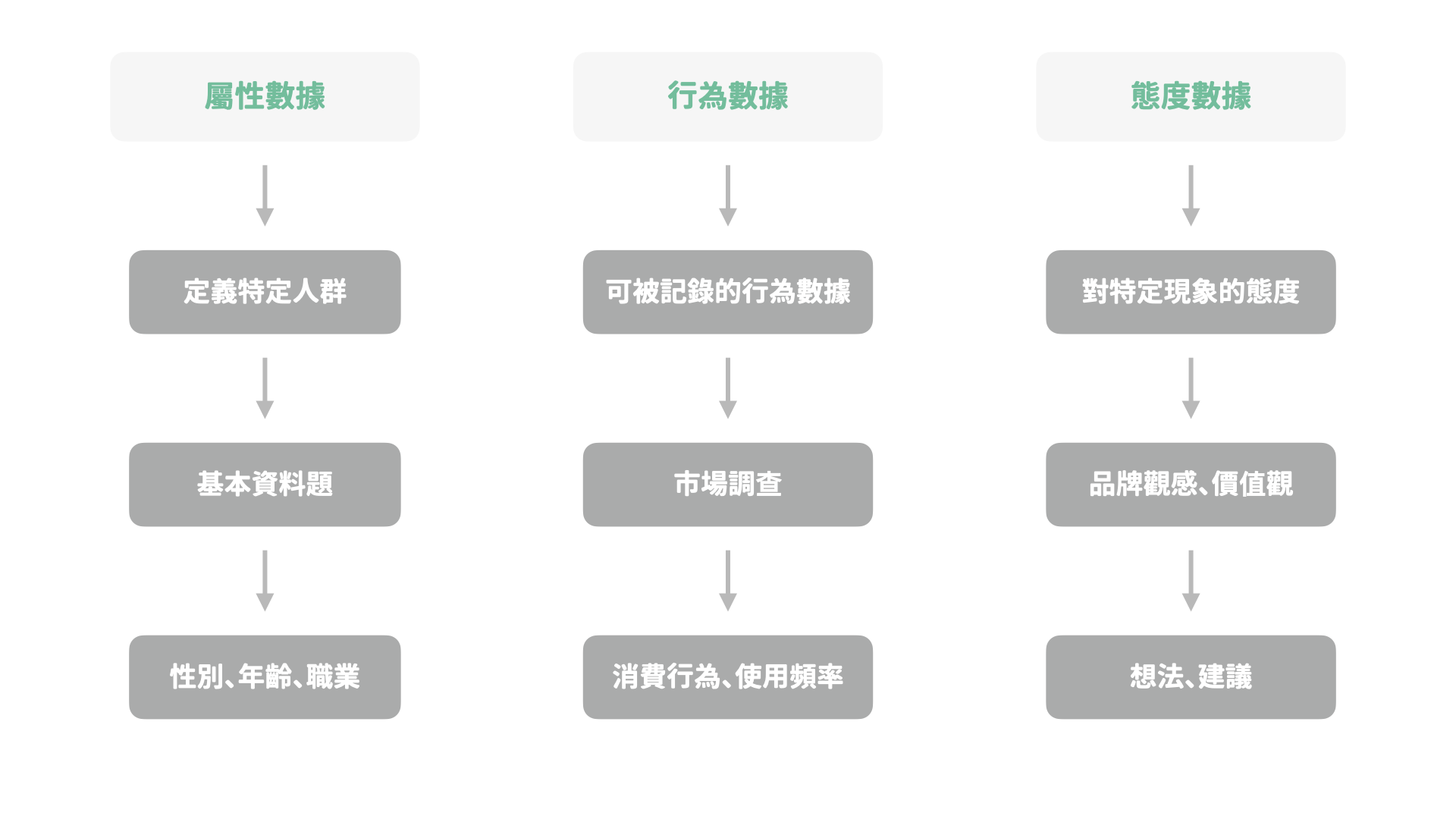
Moreover, you can classify the questions into three major categories according to the data you want to collect: 'attributes', 'behaviors' and 'attitudes'.
Attribute data: refers to data that can define the traits of specific groups of people, such as 'age', 'gender', 'marital status', 'zodiac sign', 'education', 'income level' and so on. This type of data has one characteristic that it tends to be relatively stable, not changing over time or changing slowly.
Behavioral data: refers to data that can be recorded for a specific population, such as 'shopping behavior', 'fitness frequency', 'consumption frequency', etc. The purpose of this type of data is to help us understand the behavioral characteristics of groups of specific attributes in a more specific way.
Attitudinal data: refers to attitudes and values displayed by a specific group of people towards a specific phenomenon or brand, used to explain the reasons for specific behavior. For example, we look at 'brand perception', 'values', 'personality' and so forth. Attitudinal data often contains values of greater significance, but it is also the least easy to investigate. Therefore, it is recommended to combine other survey methods for result analysis.
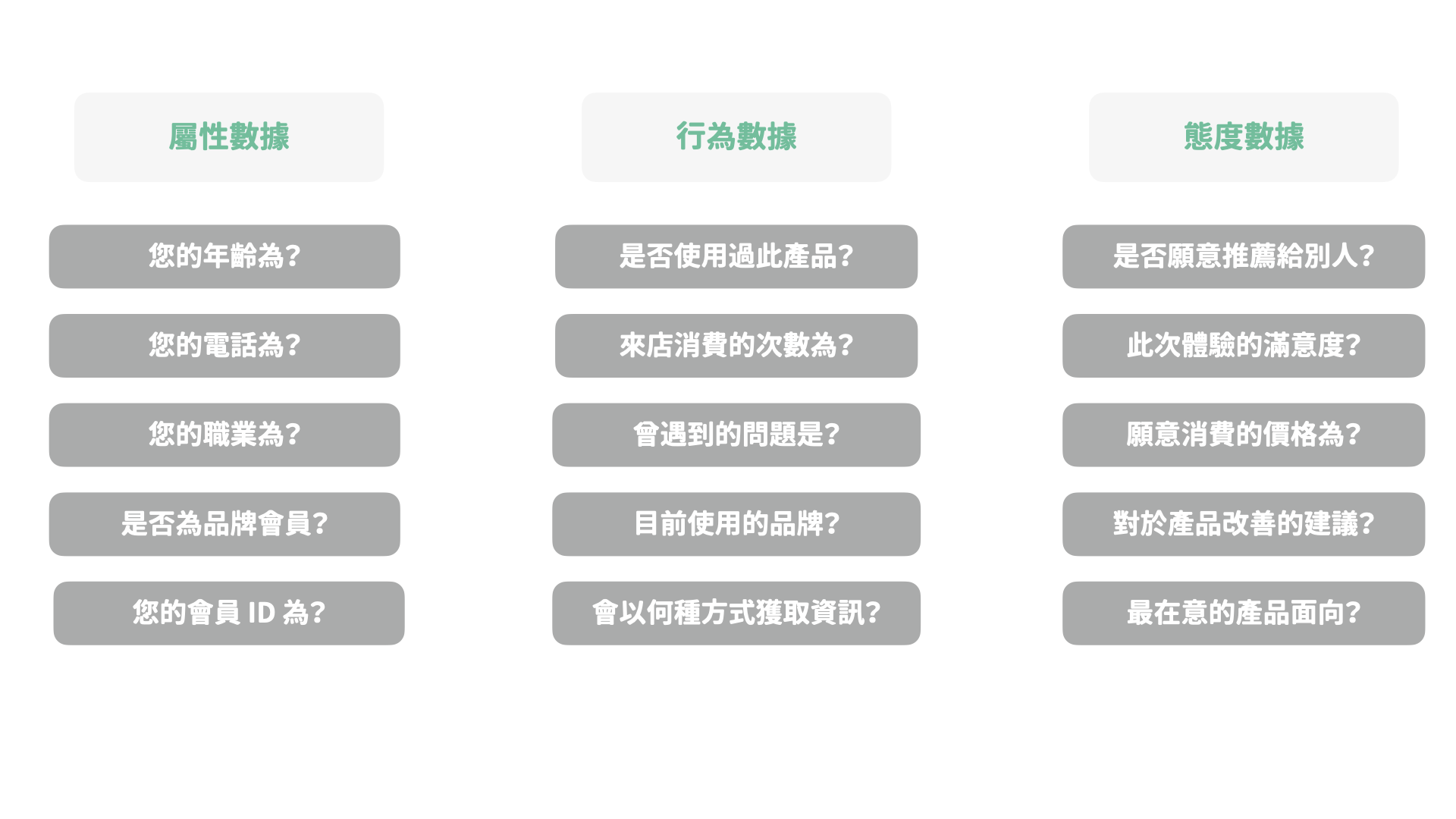
These three types of data can be transformed for easier understanding. Attribute data focuses on 'defining the respondent', behavioral data focuses on 'understanding the respondent's facts and past behaviors', and attitudinal data focuses on understanding 'the respondent's motivations and thoughts'. For these three types of data, you can ask questions in the following way:
When asking questions, bear the following principles in mind:
Do not assume anything when asking questions.
Do not ask questions that require expertise to answer.
Do not ask two behavioral questions at once.
Options should be independent of one another and mutually exclusive.
Avoid using negative or double negative questions.
Do not ask hypothetical or speculative questions about the future.
How to decide the order of questions in a questionnaire?
The order of questions can be simply grasped by the principle of 'step-by-step', starting with general questions and then slowly going into detailed questions. Alternatively, start with simpler, less thoughtful multiple-choice questions and then move on to open-ended questions that require more time to answer. Such a step-by-step approach allows respondents to understand the questionnaire better.
It is advisable to draw a flowchart to clarify whether the direction and the structure of each question match before deciding on the order of questions. A logical sequence of questions will demonstrate the professionalism of the questionnaire!
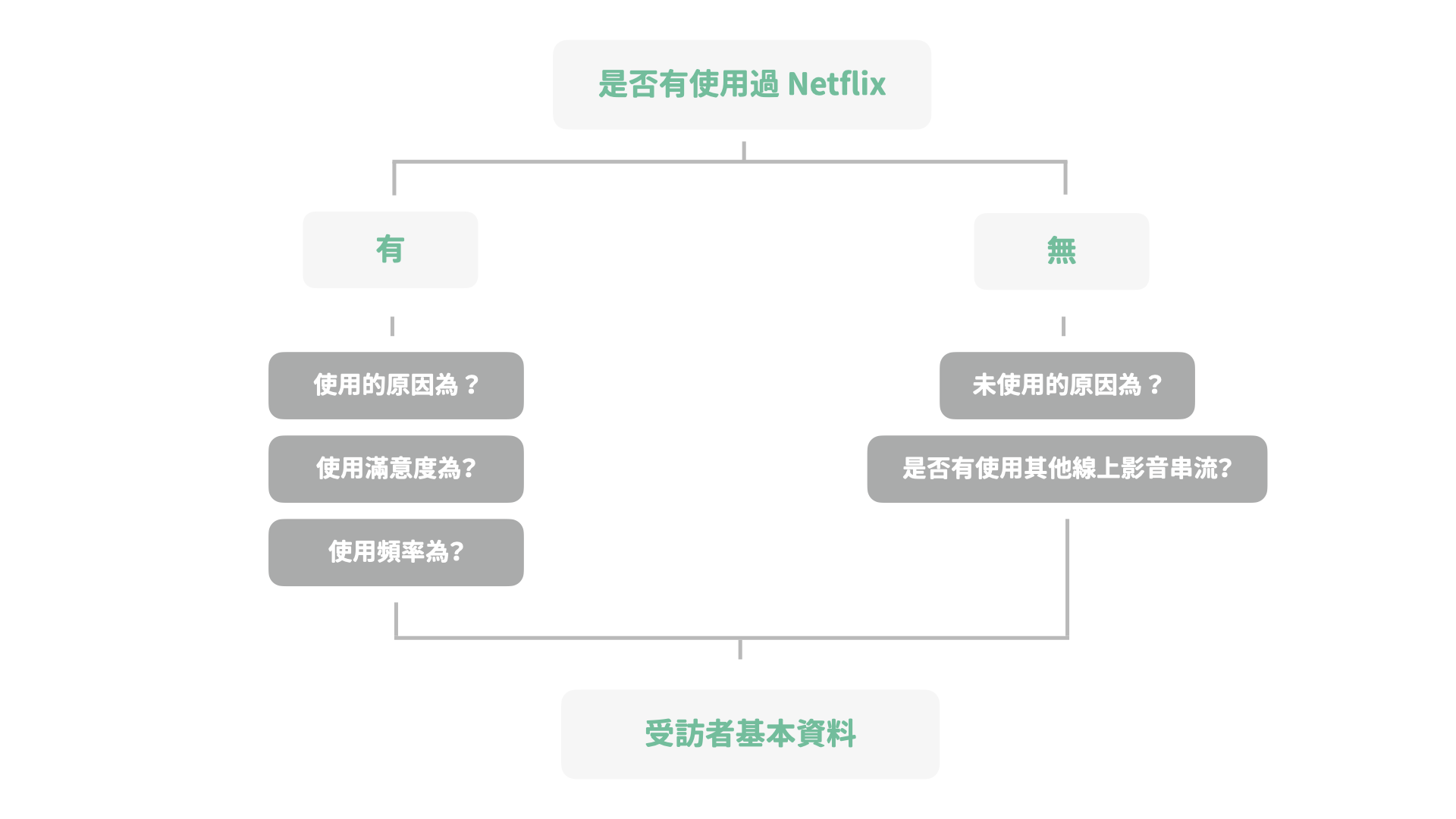
For instance, in a consumer behavior research survey, you can ask respondents whether they have used the product and then ask them about their experience and directions for improvement to create a better respondent experience and avoid biased data due to confusing questionnaire logic.
Summary
The creation of a good questionnaire starts with 'learning to ask questions'!