Plans and Limitations:
Team Plan: Up to 10 sets of advanced logic can be added per questionnaire
Enterprise Plan: Up to 100 sets of advanced logic can be added per questionnaire
Unlike "Skip Logic" and "Conditional Branching," which only support basic logic directing respondents to specific questions upon selecting certain answers, Advanced Logic provides the capability to establish multiple conditions for triggering skips. It introduces logic operators like "not equal to," "contains," and "does not contain." This empowers survey creators to design surveys with greater flexibility, enabling the achievement of diverse goals.
Before starting the setup, please note:
The available question types for advanced logic include Multiple Choice, Checkboxes, Single Choice Matrix, Rating, Slider, and Ranking.
You can choose either basic logic (skipping and branching) or Advanced Logic but not both.
You can set up to 10 conditions within a single logic rule.
In the event of conflicting conditions, the logic set last will take precedence and be executed.
If an option has already been set to "Randomize," it cannot be selected in the "Advanced Logic" settings.
Next, we will use Checkboxes and Multiple Choice questions as examples to illustrate how to proceed with the setup of "advanced logic." The later part of the article will provide further explanations for different question types.
Where to Find Advanced Logic
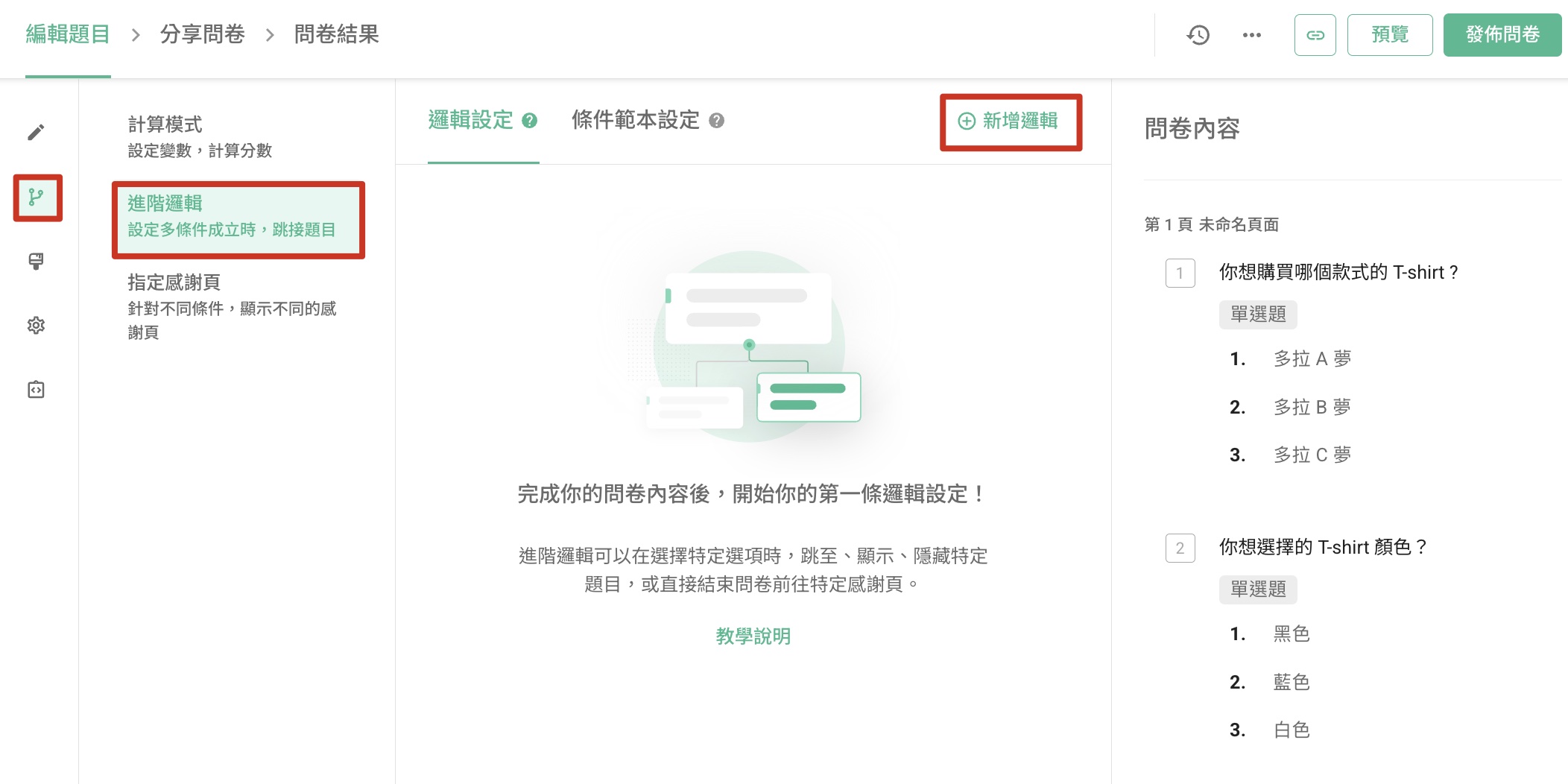
First, go to the 'Build' page in your survey's backend. In the left-hand sidebar, click the 'Logic' icon. Next, go to the 'Advanced Logic' page, where you can configure advanced logic rules for individual questions and options. You can also assign specific Thank You pages based on respondents' selections.
How to Set Up Advanced Logic
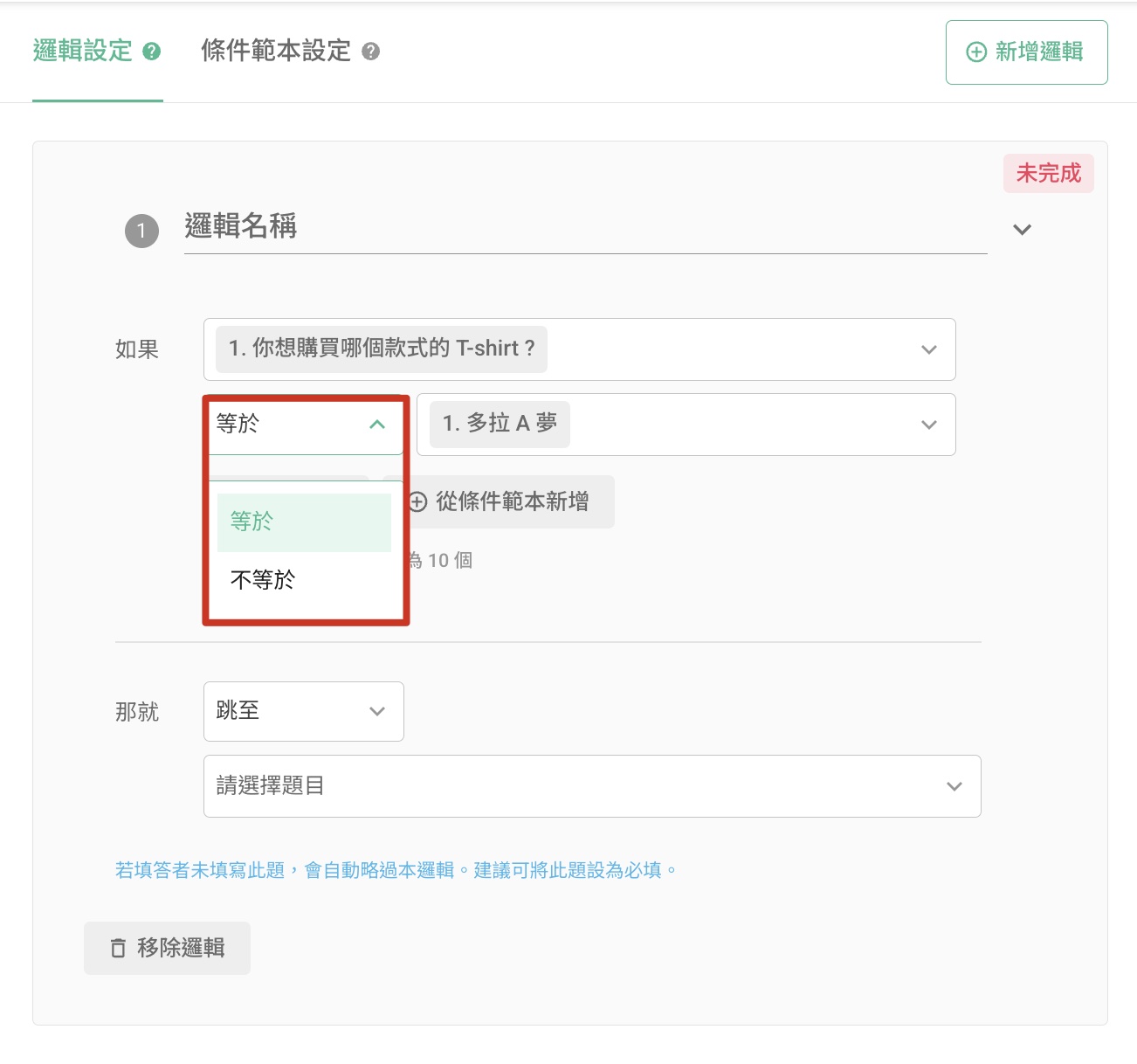
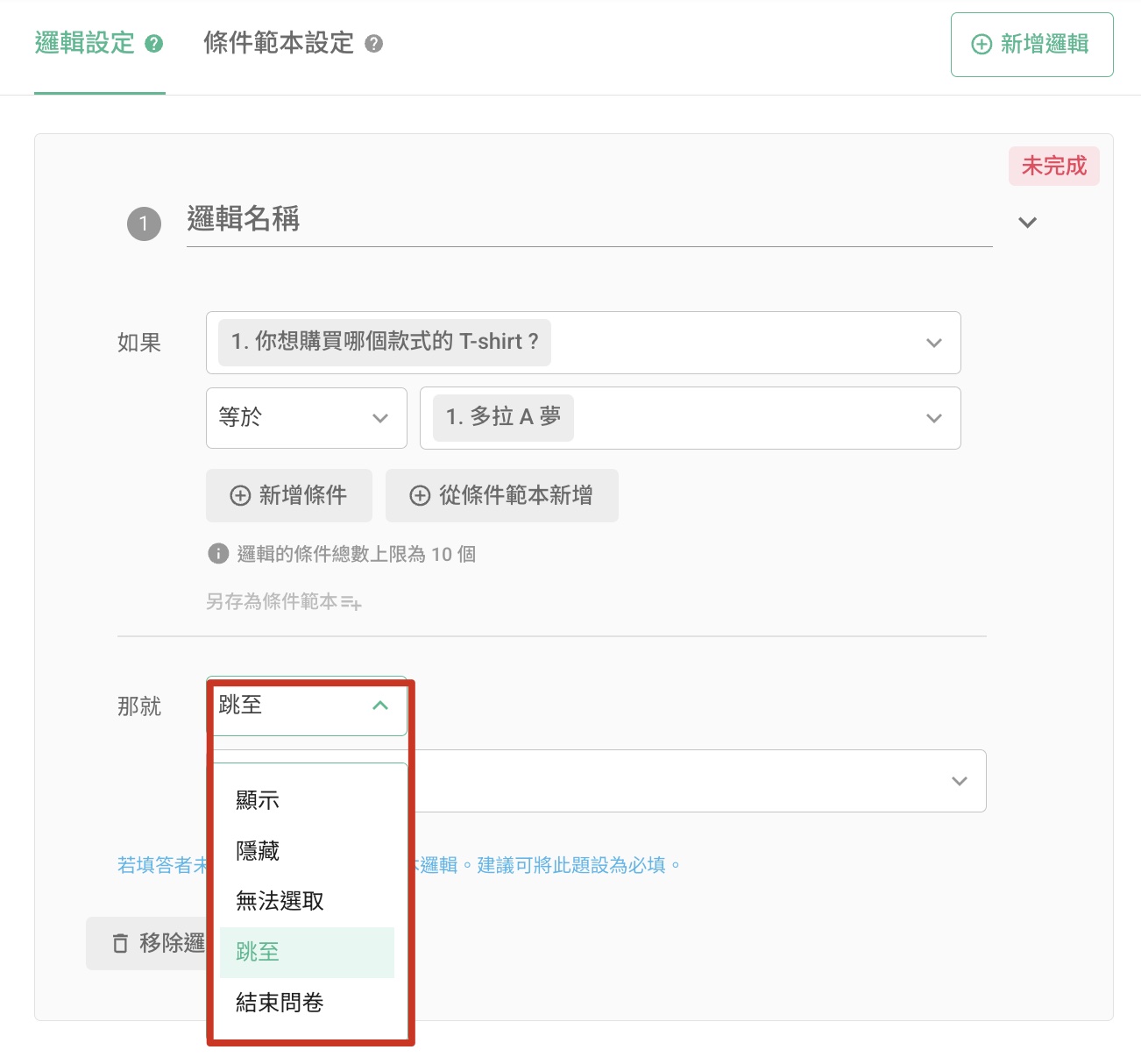
In Advanced Logic, you can choose between single-condition skip logic and multi-condition skip logic. You can set up a single condition or multiple conditions to trigger specific actions (if... then...). The available actions include showing, hiding, skipping to, and ending the survey.
Single-Condition Logic
First, set up a condition in Advanced Logic (if... equal to/not equal to/contains/does not contain...), then configure the action you want to trigger (then...).
Multi-Condition Logic
When you need to set up more than one condition, click "Add Condition" to configure multiple conditions. You can choose "AND" or "OR" in the configuration process. If you need to set more than two conditions, they must all be either "AND" or "OR."
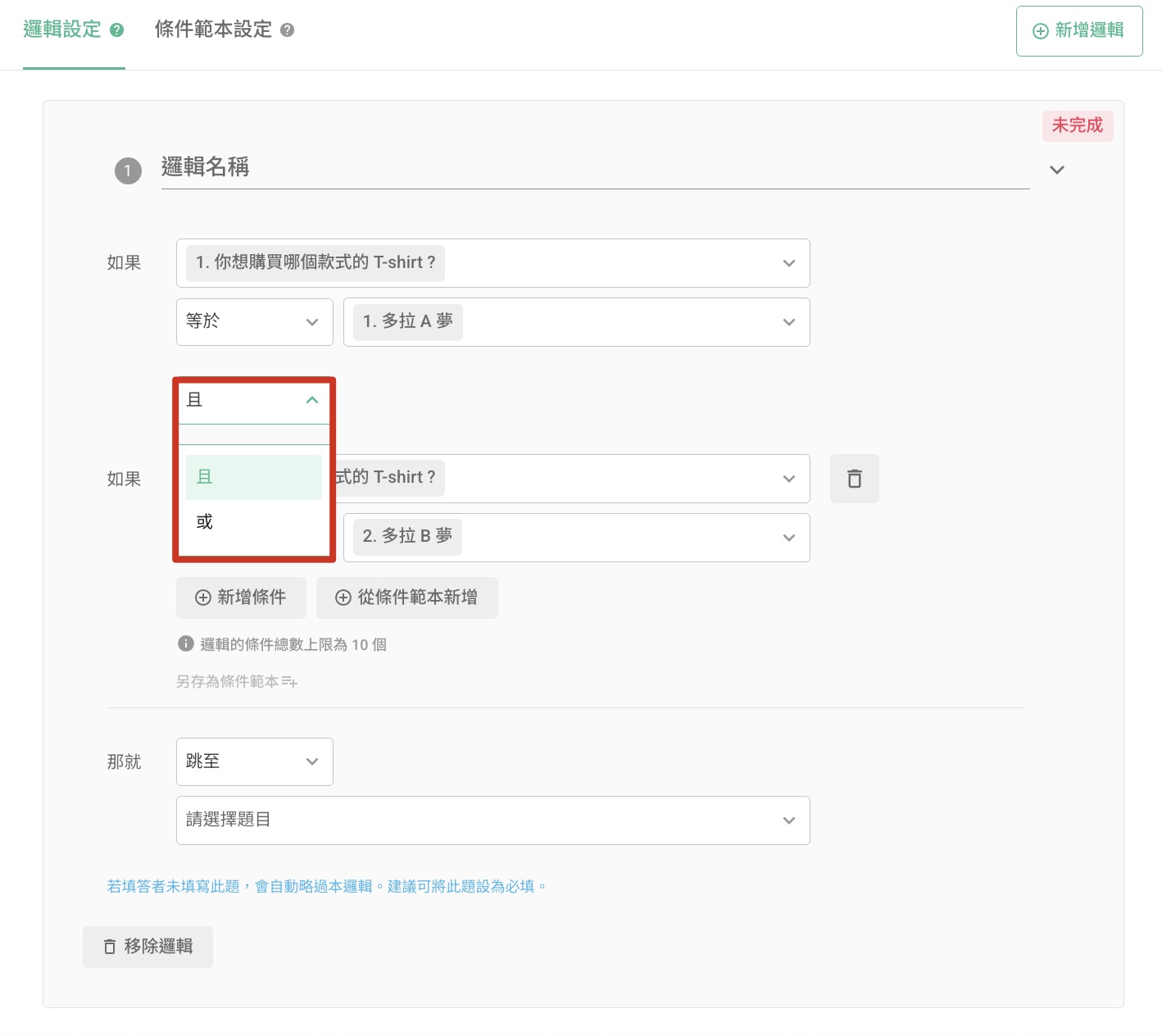
Note: The system will only execute the logic that is fully set up. If you see "Incomplete" in the top right corner, it means you haven't finished setting it up yet.

Integrating Conditional Thank-you Page
Advanced logic can be combined with Conditional Thank-you Page. When specific conditions are met, respondents can be directed to designated custom thank-you pages. To set this up, first go to "Conditional Thank-you Page" and add a thank-you page.
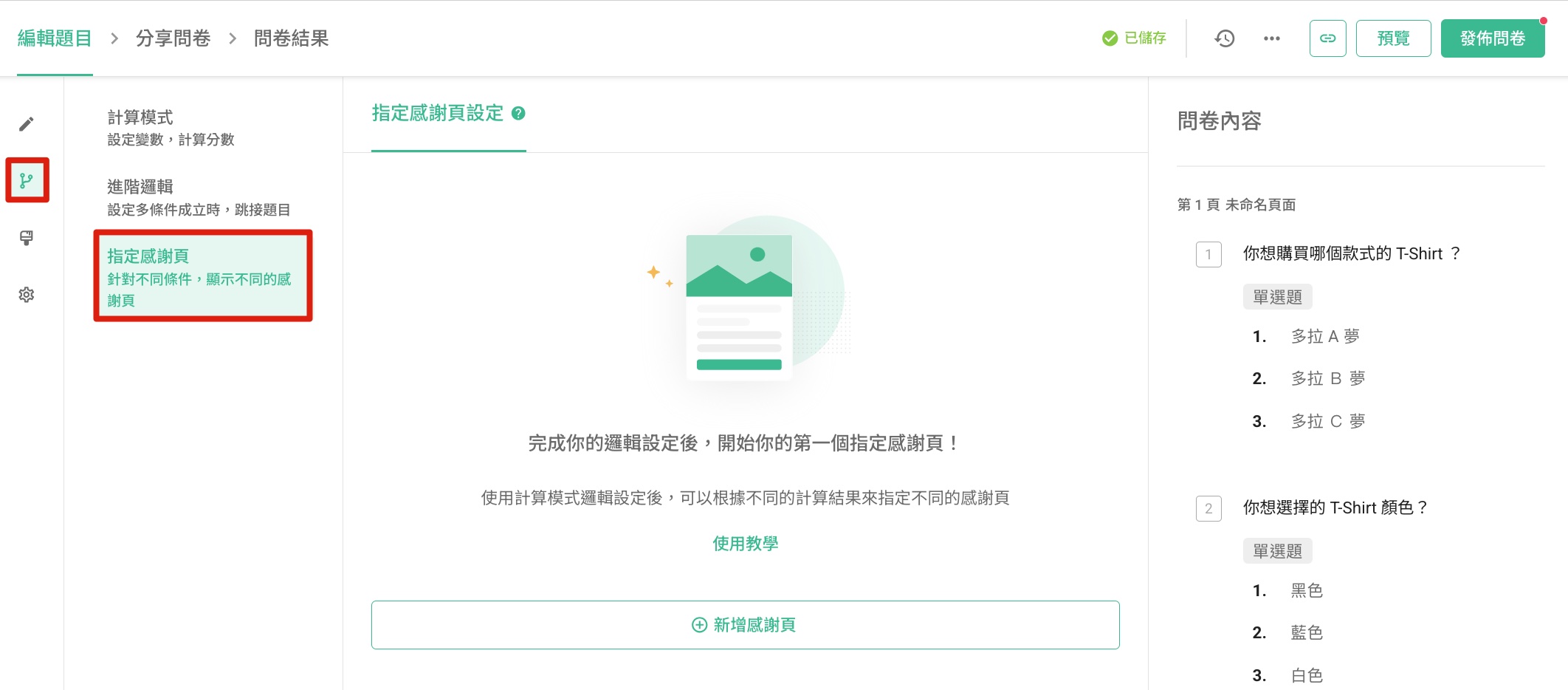
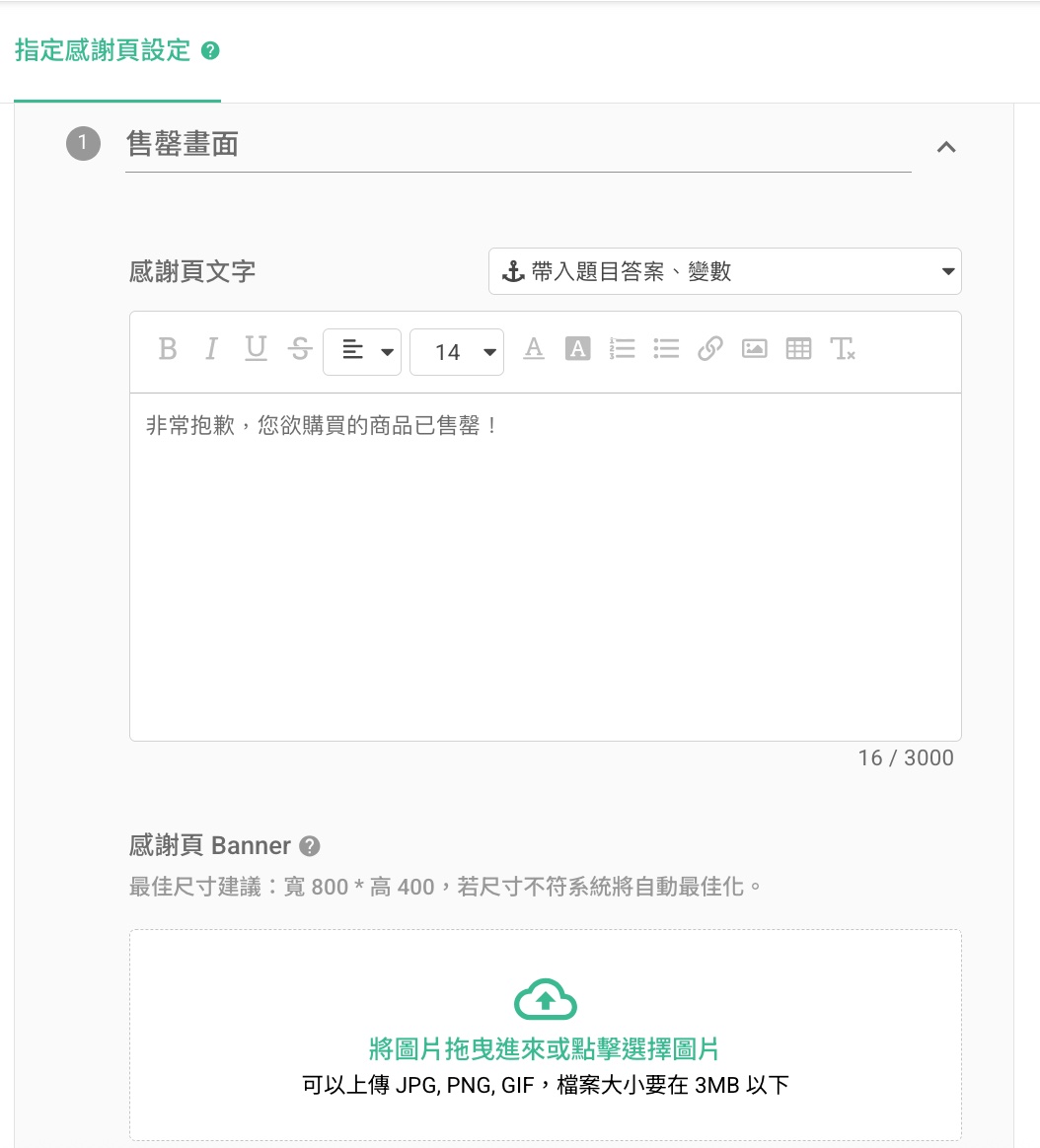
Next, return to the Advanced Logic page, complete the condition setup, and select End Survey. Then, choose the custom thank-you page to which you would like to direct respondents.
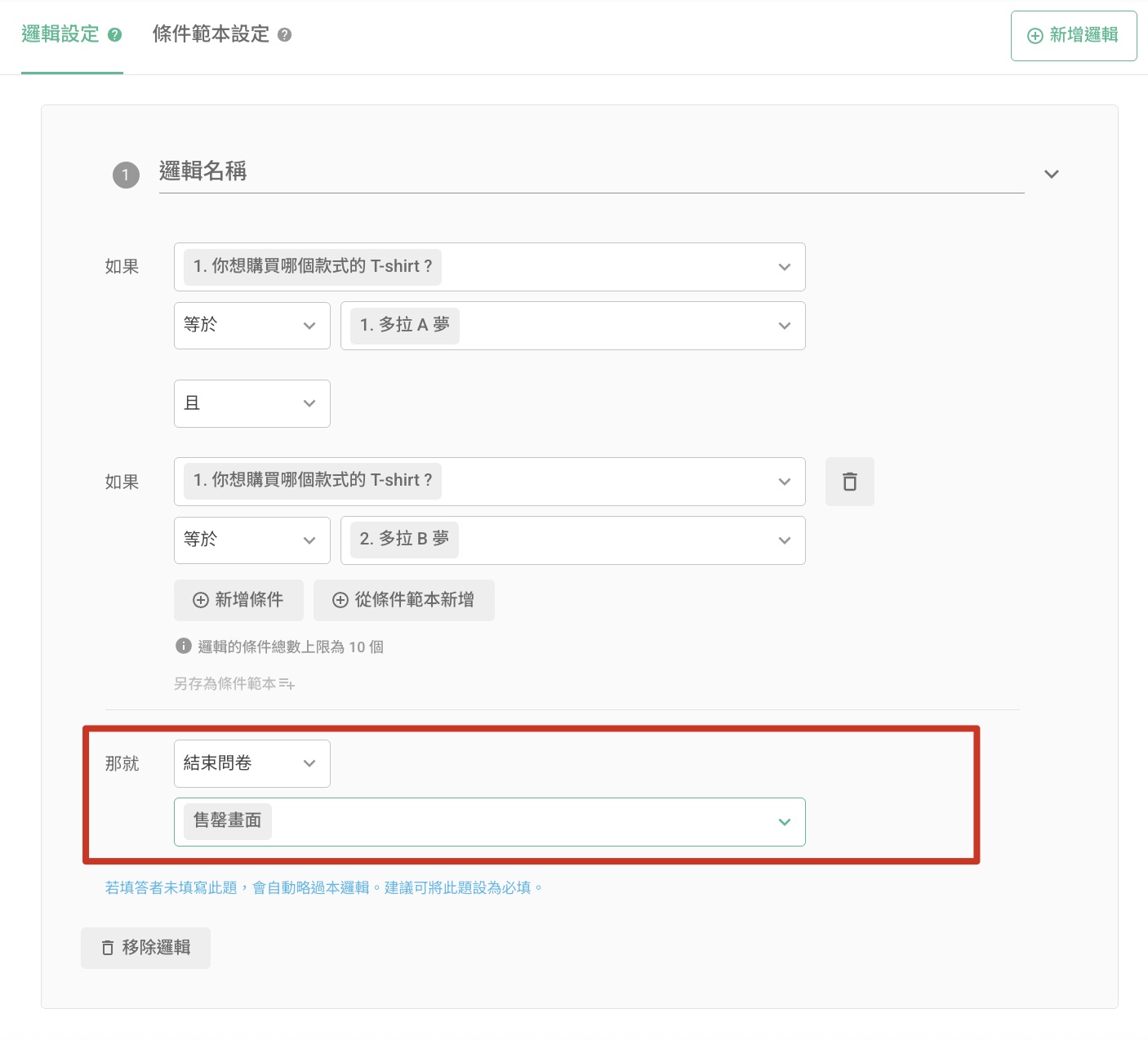
In addition, Advanced Logic and Calculation Mode can be used simultaneously. It's important to note that Advanced Logic and the Calculation Mode share the same Conditional Thank-you Page settings. If there is a conflict in the settings between Advanced Logic and the Calculation Mode, the system will prioritize the Advanced Logic settings.
Advanced Logic Settings for Each Question Type
By following the steps outlined earlier, you can apply advanced logic settings to different question types. The concept of logic setup remains the same, and the available trigger actions are identical. However, the condition targets will vary depending on the question type.
Single Choice Matrix
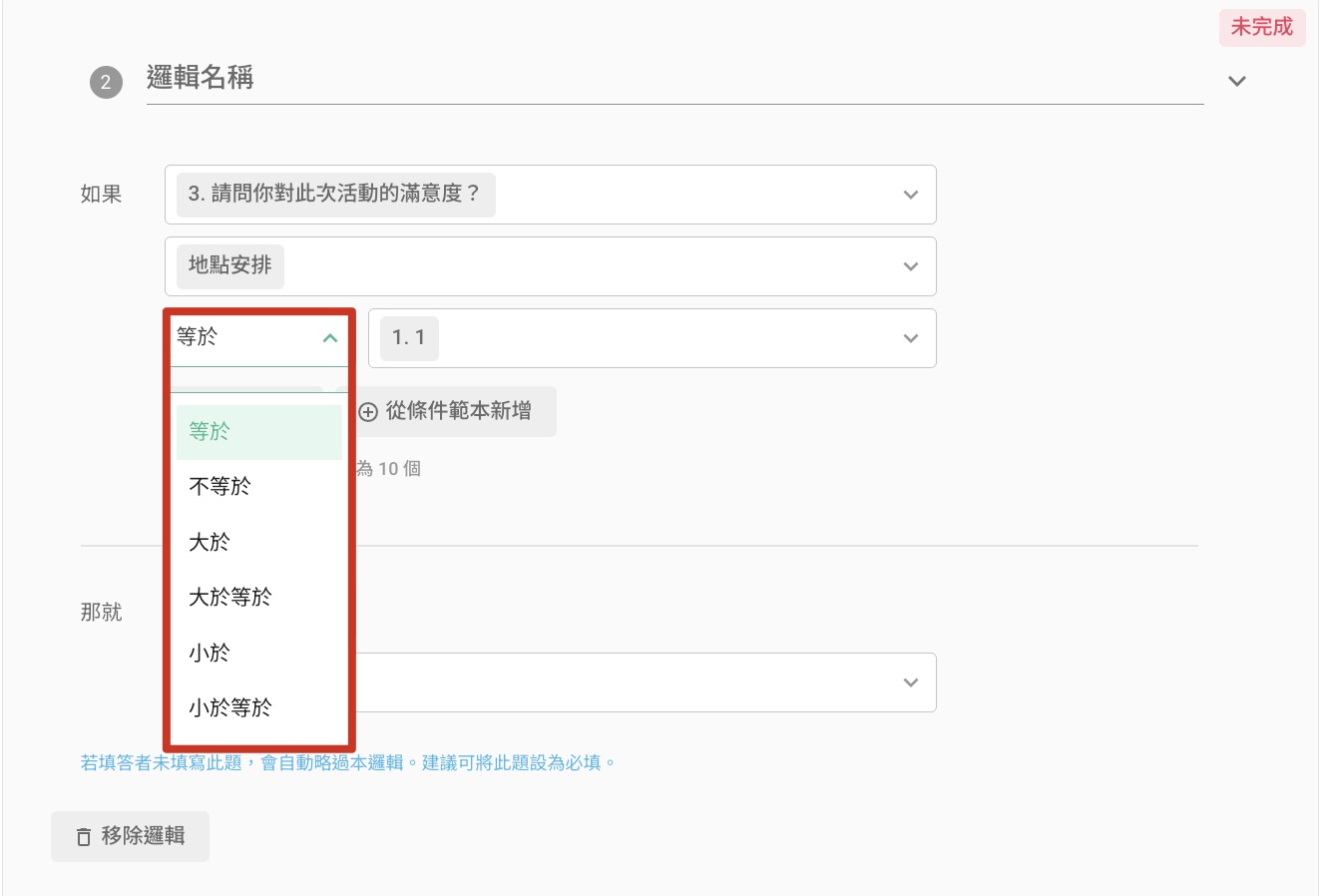
When choosing to use a Single Choice Matrix Question, the matrix sub-questions become the condition objects. When setting logic conditions, you can select "All question(s)," "Random question," or "Any of the questions."
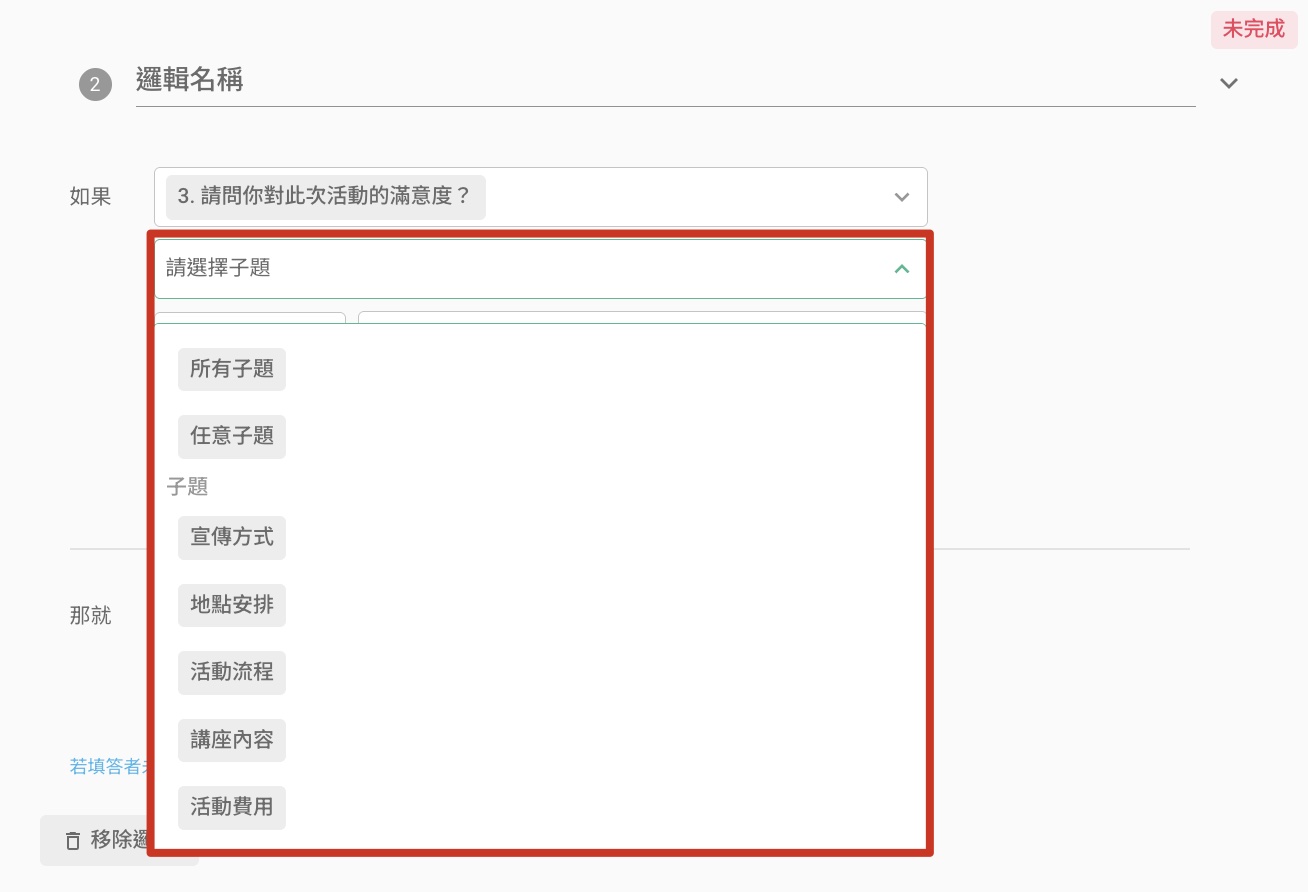
Next, you could choose "Equal to," "Not Equal to," "Greater than," "Greater than or Equal to," "Less than," or "Less than or Equal to" as conditions.
For example, suppose you set a logic condition such as: If the selected answer is greater than 'Very Dissatisfied', then show the following question. Moreover, if we assign weight: 1 to 'Very Dissatisfied', then users who select any option with a higher weight—such as 'Dissatisfied (2), Neutral (3), Satisfied (4), or Very Satisfied (5)'—will meet the condition and trigger the follow-up question.
Rating
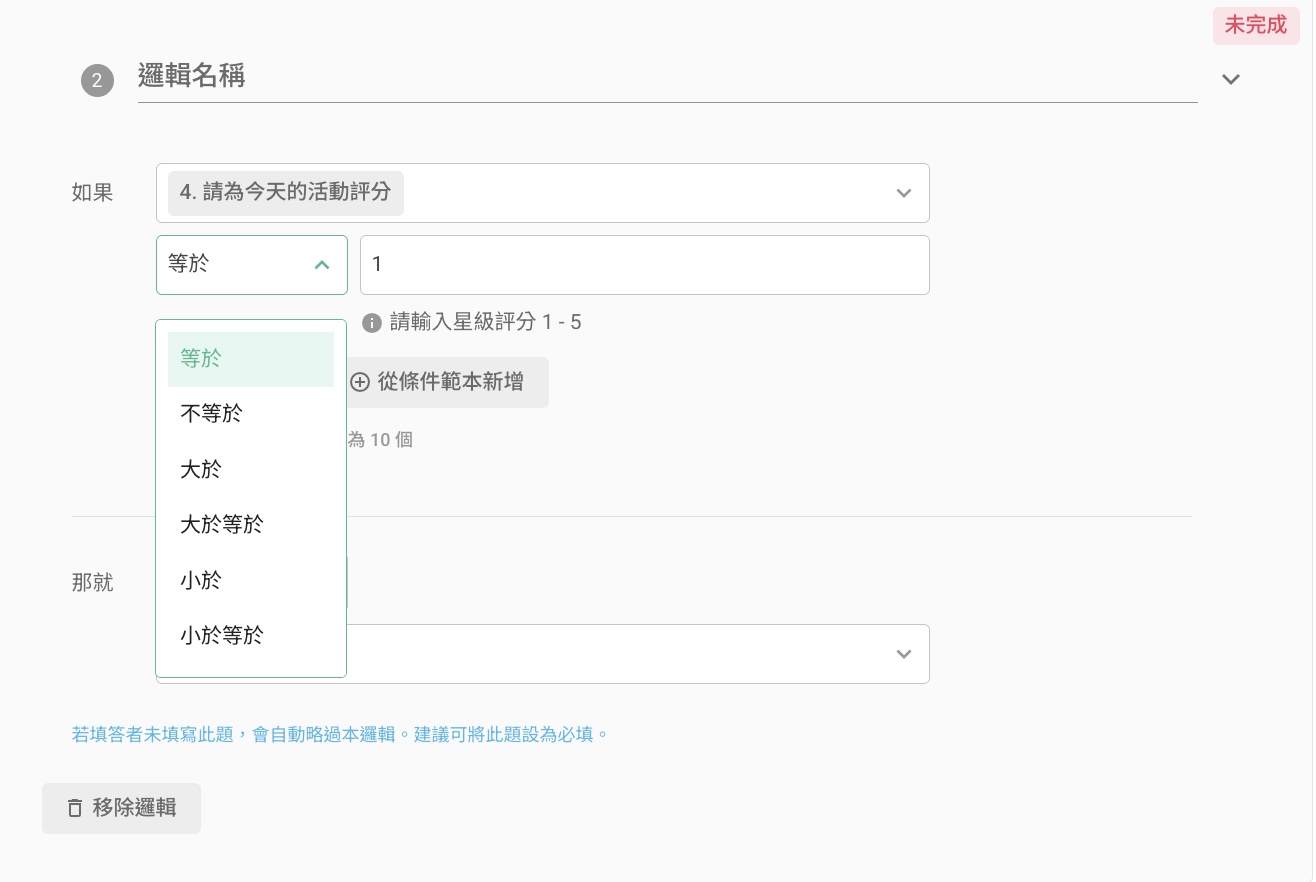
When choosing a Rating Question, the star count serves as the condition, and you can set conditions such as "Equal to," "Not Equal to," "Greater than," "Greater than or Equal to," "Less than," or "Less than or Equal to" for evaluation.
Slider
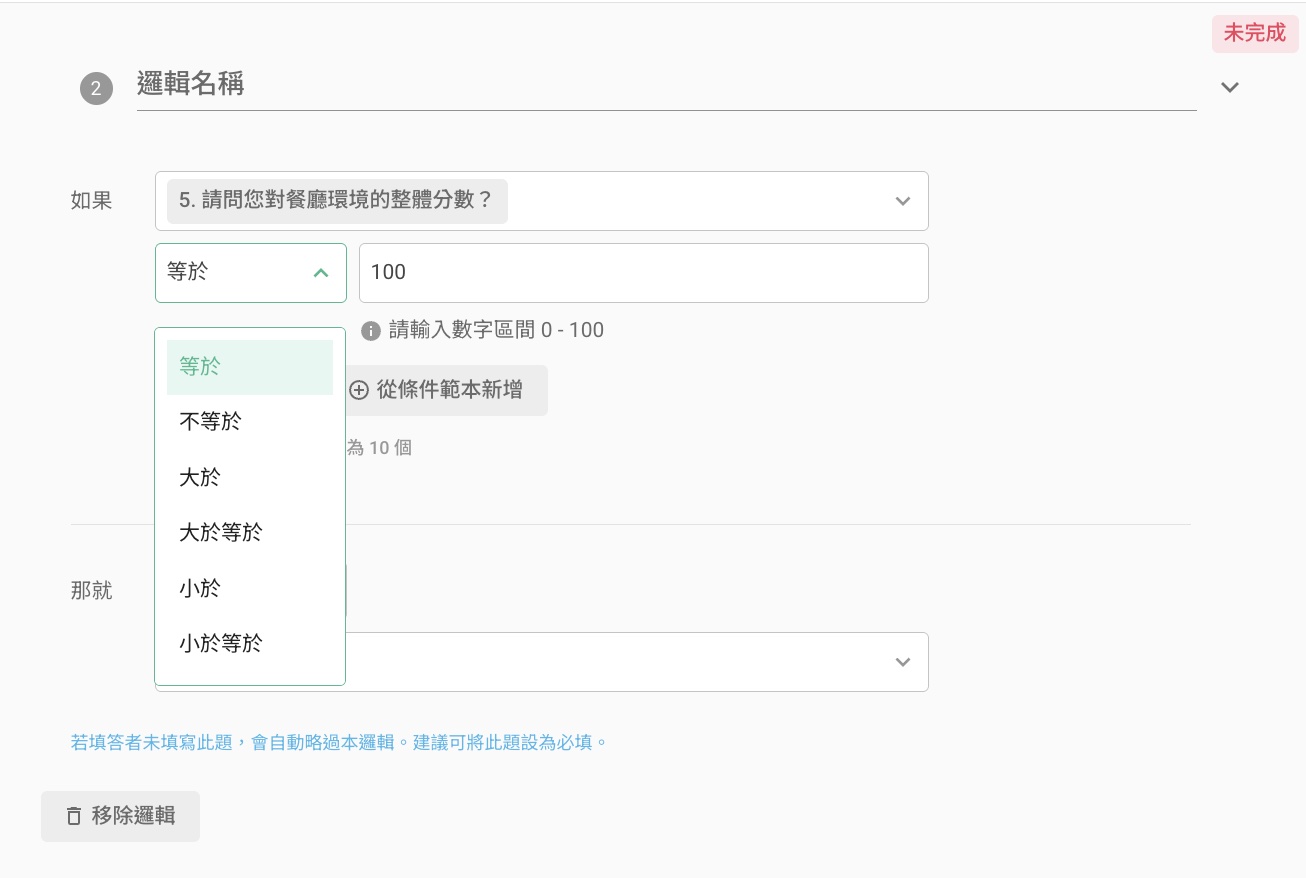
When selecting a Slider Question, the numeric value serves as the condition, and you can set conditions such as "Equal to," "Not Equal to," "Greater than," "Greater than or Equal to," "Less than," or "Less than or Equal to" for evaluation.
Ranking
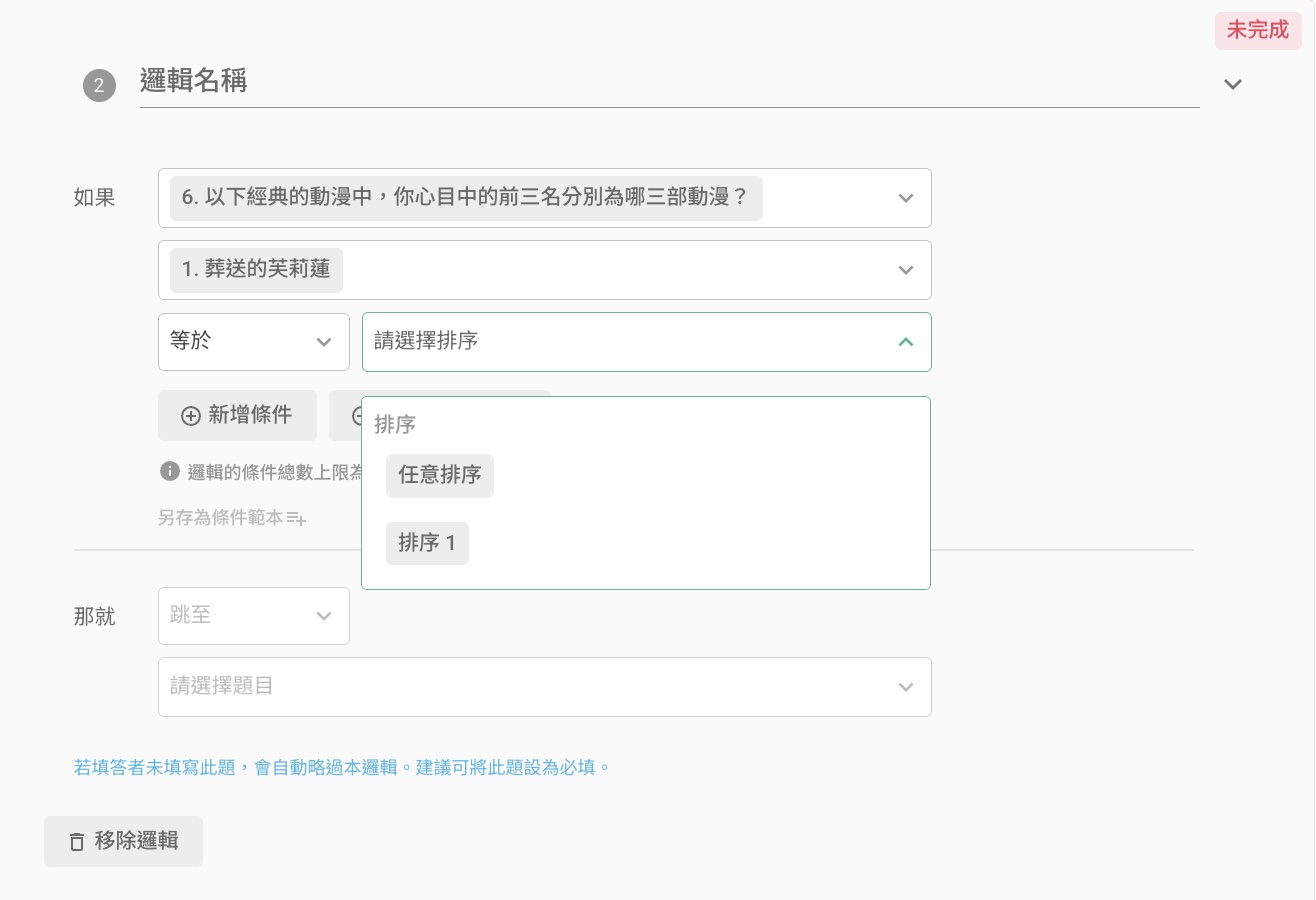
When you use a Ranking Question, each option becomes a condition target. You can then set conditions based on the ranking order, such as "Equal to," "Not Equal to," "Prior to (ranked higher than)," or "Behind (ranked lower than)"
Note: If the ranking condition is set to "Random sorting," it means that the options were ranked during the response. In this case, the conditions "Prior to" or "Behind" cannot be used.
Please note that the Advanced Logic feature is exclusive to the SurveyCake Enterprise Plan. If you are interested in this feature, feel free to complete the form and get in touch with us.
Summary
Advanced Logic helps you create flexible, effective surveys tailored to your needs.
Discover the new possibilities it brings to your surveys!